
 中文
 English
 Русский

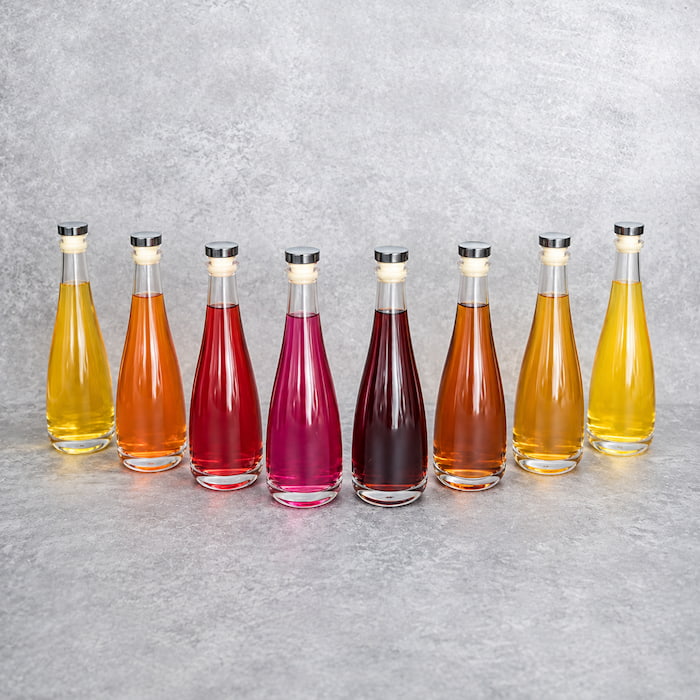
Product Overview
Water-soluble pigments are a class of coloring agents that dissolve in water and are used to adjust the color of food products. Different varieties have their own hues, solubility properties, and application characteristics; they can be selected based on the desired color and formulation requirements, providing coloring solutions that give food products a harmonious and uniform appearance.
This product is suitable for formulation testing in aqueous systems. When selecting a product, consider the food category, pH, processing temperature, light exposure, and storage conditions to confirm the suitability and stability of the specific product. The available product varieties, specifications, and quality standards are subject to the product label, technical specifications, and batch test reports.
Features
Water-Based Coloring:It is suitable for dissolution in an aqueous medium before addition, which facilitates uniform coloring through stirring.
Available colors:Different varieties come in different colors, so you can choose the one that best matches your product's target color.
Easy to mix:By preparing a dye solution of the appropriate concentration, you can compare small samples and adjust the addition ratio.
Process Adaptation:Based on the formulation’s pH, the heating process, and storage conditions, select the varieties suitable for the actual process.
App Recommendations
The following are guidelines for application development. Before conducting formulation trials, you should first confirm the scope of use and maximum limits for specific colorants in the target food category.
| Applications | Coloring Requirements | Test Focus Areas |
|---|---|---|
| Beverage Systems | Adjusting the Color and Appearance of Water-Based Systems | Solubility, pH, clarity, and color after storage under light |
| Candy and Sweets | Create a color scheme that aligns with the product design | Sugar solution concentration, heating temperature, feeding sequence, and color uniformity |
| Frozen Beverages | Adjust the product's color to complement the flavor profile | Emulsion System Compatibility, Color Differences Before and After Freezing, and Storage Performance |
| Pastry Decorations and Related Ingredients | For coloring approved decorative ingredients | Moisture Conditions, Color Migration, and Color Changes After Processing |
Technical Specifications
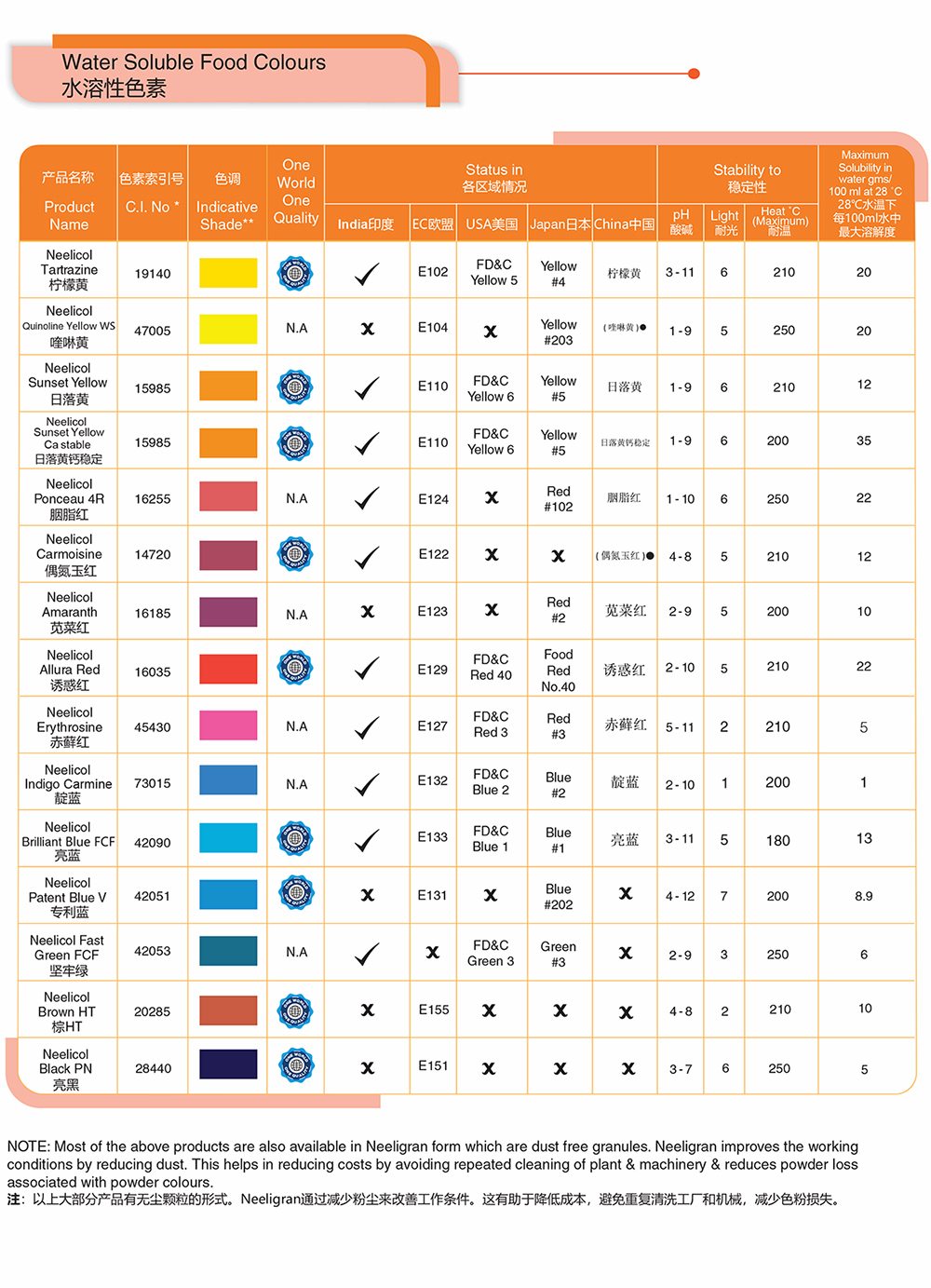
The figure below shows information on our current product lineup, listing the names, pigment index numbers, and selected performance parameters of various grades for reference in product selection. Specific specifications are subject to the corresponding technical data sheets and batch test reports; the regional usage information shown in the figure does not constitute the basis for current authorization.

Use and Storage
Before use, verify the product name, specifications, and application requirements. According to the product instructions, thoroughly dissolve the product in an appropriate amount of water first, then gradually add it to the formulation while stirring until evenly mixed. Determine the addition ratio through small-scale trials, record the order of ingredient addition and processing conditions, and check for any color changes in the finished product after processing and storage.
The product should be stored in a sealed container, protected from light and moisture, and kept away from high temperatures, as indicated on the label. Keep dispensing tools clean and dry, and reseal the container promptly after opening. Maintain proper hygiene when handling the prepared solution; storage conditions and shelf life should be determined based on actual process validation.
Frequently Asked Questions
Q: What is the difference between water-soluble colorants and food-grade aluminum lakes?
Water-soluble pigments impart color by dissolving in water; edible aluminum lakes are typically insoluble in water and impart color through particle dispersion. The appropriate formulations and processing methods differ for the two, and the choice should be based on the specific system.
Q: Can it be added directly to oil for use?
Water-soluble does not mean oil-soluble. In formulations dominated by oils and fats, it is not advisable to directly apply the methods used for aqueous-phase additives; instead, the coloring agents and dispersion processes should be evaluated based on the composition of the system.
Q: Why are there undissolved particles or uneven coloring?
Check the water usage, preparation concentration, mixing time, and whether the powder has become damp or clumped, while also verifying the product’s solubility. Adjust the pre-dissolution method and feeding sequence as necessary.
Q: Will the color change after heating or storage?
Different varieties respond differently to temperature, pH, and light, and other ingredients in the formulation may also affect color. It is recommended to conduct heating and storage tests using the actual production process.
Q: Can different pigments be blended together?
Color-matching tests may be conducted provided that all components meet the requirements for the intended application, and the usage amounts and restrictions should be verified separately. After blending, the solubility, target shade, and storage stability should also be verified.
Q: How do I choose a product and determine the dosage?
First, identify the food category and target color; then conduct small-scale trials based on the specific usage requirements, pigment content, and formulation conditions for each variety. Do not directly substitute different varieties or different concentration specifications in equal amounts.
